The author
Ryan Rijvers
He is thirteen, and he wrote this book. He is probably about your age — or younger.
From Schimmert, in the Netherlands. He wrote the book himself, in between racing karts across Europe and building things on a laptop. Here is the short version of how he got here.

Eight to thirteen
Where there is a date and a result, there is a link to the report of it, written at the time by somebody with no stake in this book. Every one of those reports is in Dutch, because that is where he races. There is more about that below.
Age 8: First time in a kart
He sat in a kart for the first time at eight. Almost straight away came his first race ever: Spa, Micromax class, round two of the Dutch Rotax Max championship. He came fourth, was named best rookie, and was voted driver of the day. First race. Ever.
Source: RaceXpress, 27 May 2022Parkstad Actueel, 26 May 2022
Age 8–10: Racing across Europe
For Strawberry Racing and for François Slangen. Wins, and a lot of podiums.
No source: No published results sheet adds these up, so there is no number here and nothing to link to. Chapter 7 says a claim you cannot check is worth nothing — and that includes this one.
Age 10: Belgian champion
The class was Rotax Max Mini Rookie. It came down to the last round, at Genk, in October 2023. He finished third in that final, ahead of the one driver who could still have taken the title off him — and that was the championship. His first.
Source: RaceXpress, October 2023
Age 10: A win in Germany, in a different class
Minimax this time, not the Mini Rookie class he took the Belgian title in. Round two of the German Rotax Max championship, at Genk again, and he won the final. Second place went to the driver who had been Rotax Max world champion the year before. Third was the German Minimax champion. Two different classes, two different results. People mix them up — do not.
Source: RaceXpress
Age 10–11: The big series
The Rotax Max Euro Trophy, and the Rotax international finals at Le Mans — which is the race every kart driver in Europe is trying to qualify for.
No source: No report to link to for these two. Nobody has written one up that names him, so this comes from Ryan's family — weaker evidence than the results above it, and you should read it that way.
Age 11: A Formula 4 car, built to fit him
Not a race. This is the part people usually get wrong, and the true version is better.
Here is what actually happened
No source: It is not a race, so there is no results sheet and no report to link to. This one comes from Ryan's family. That is weaker evidence than everything above it, and you should read it that way.
Age 13: Wrote this book
Sixty-four pages, fifteen chapters, nineteen builds.
Where all that comes from
None of those links are ours. RaceXpress is a Dutch motorsport site and Parkstad Actueel is a local news site near where he lives. Both of them reported the races at the time, years before this book existed, so there was nothing in it for them either way.
They are in Dutch. That is worth saying out loud rather than letting you find out by clicking: your browser will offer to translate them, and even if it does not, the part you came for — the date, the class, the finishing position — is readable anyway.
This site's rule, set out on the Napoleon Hill page, is that every number links to a primary source or it gets cut. That rule is aimed at a dead author with a famous name, so it has to apply here first. If you click one of these and it is dead, tell us — the mailbox at the bottom of this page is read by an adult, and a broken source on this page is a real problem, not a typo.
Links checked on 2 August 2026.
The Formula 4 part is the one thing on this page nobody else has written down. He trains in the car rather than racing it, so there is no race, no results sheet and no report to link to — the timeline says exactly that where the claim sits, and it comes from Ryan's family.
About that Formula 4 car
At eleven he got into a Formula 4 car that had been built to fit him. That is the bit people skip over. An eleven-year-old does not fit an adult single-seater, so the seat, the pedals and the steering had to be made to his measurements before he could safely drive it at all.
He does not race it. He trains in it.
That difference matters, and it is the same difference this whole book is about. Training is the invisible part. Nobody films it, nobody posts it, and it is not the story anyone tells at school. It is also the part that decides what happens later, and that is worth more than a bigger-sounding version of it.
What he is into now
Building things with AI and code — describing what he wants, watching it get made, then fixing what came out wrong. It is the same loop as everything else on this site: pick one thing, make the first step small enough to actually start, and keep what you build. The first project he built that way, mistakes still in it, is a slot on his receipts page that is still empty.
This site was built the same way. How this was made says which part is which, and what the model got wrong.
You do not need a kart or a race licence for that one. A laptop and an afternoon will do — and all nineteen builds in this book are 24-hour builds. You start one now and you have something by tomorrow night.
The two pictures from the book
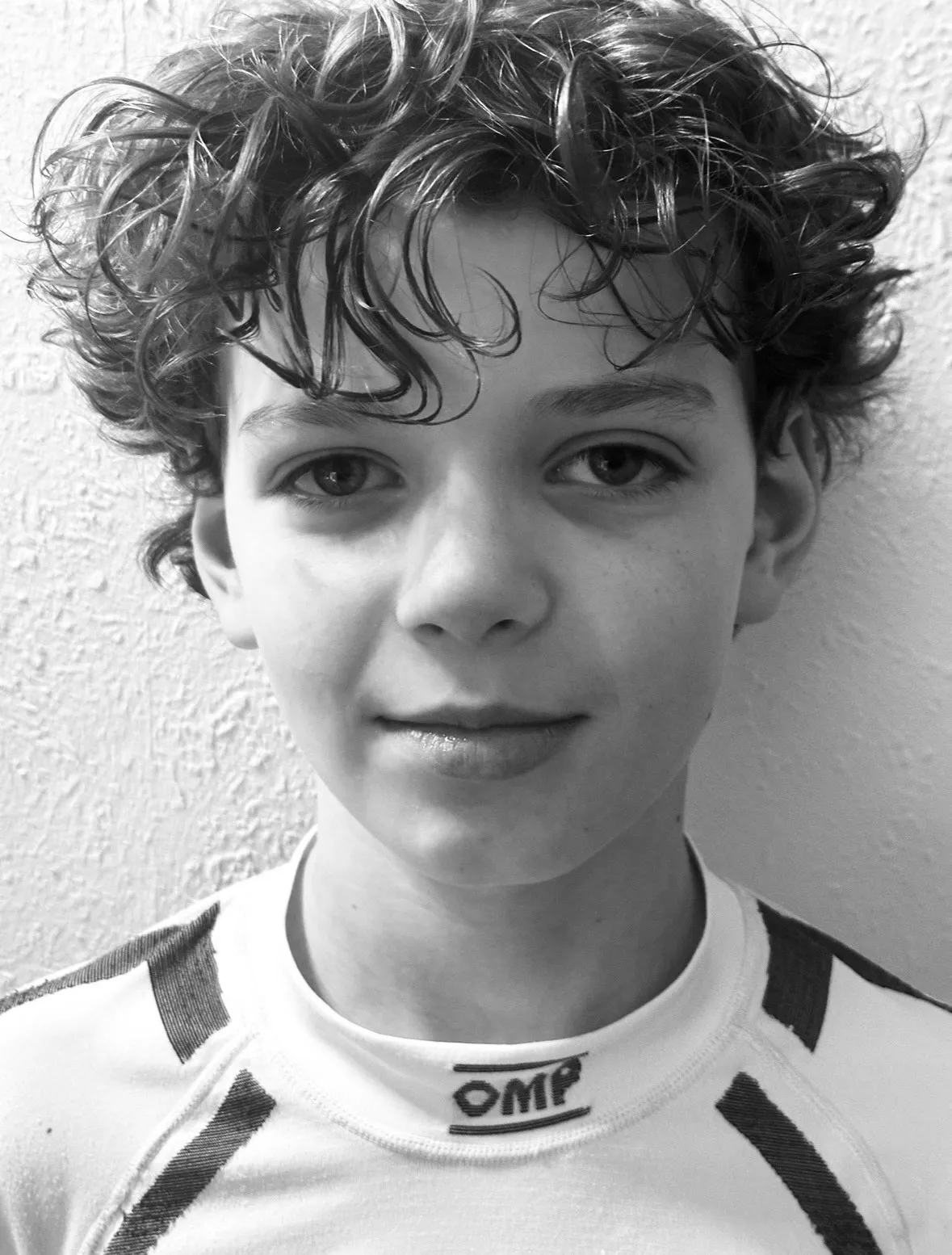

Everywhere else in the book, the boy in the illustrations is not Ryan — he is whoever is reading. That is on purpose, and the two are never mixed up.
“Why would I take advice from a thirteen-year-old?”
Fair question. The honest answer is not that karting makes him an expert on money.
It is that the method in this book — pick one thing, shrink the first step, do it before tomorrow night, keep the proof — is the method he already uses somewhere it is impossible to fake. A stopwatch does not care how you felt about it, whether you meant to, or what you posted afterwards. Either the lap was quicker or it was not.
That is the only thing he is claiming, and it is why every build on this site ends with something you can point at.
His own receipts
The book tells you to keep proof of what you build, so the fair question is what the author has kept. His folder is here, and most of it is still empty. The empty ones say what is missing instead of making something up.
What is deliberately not on this page
No school, no address, no training schedule, no race calendar, and no way to message him. He is thirteen. Results are public; a kid's week is not.
There is one mailbox for this whole site, at the bottom of every page, and an adult reads it. Ryan does not reply to strangers anywhere.